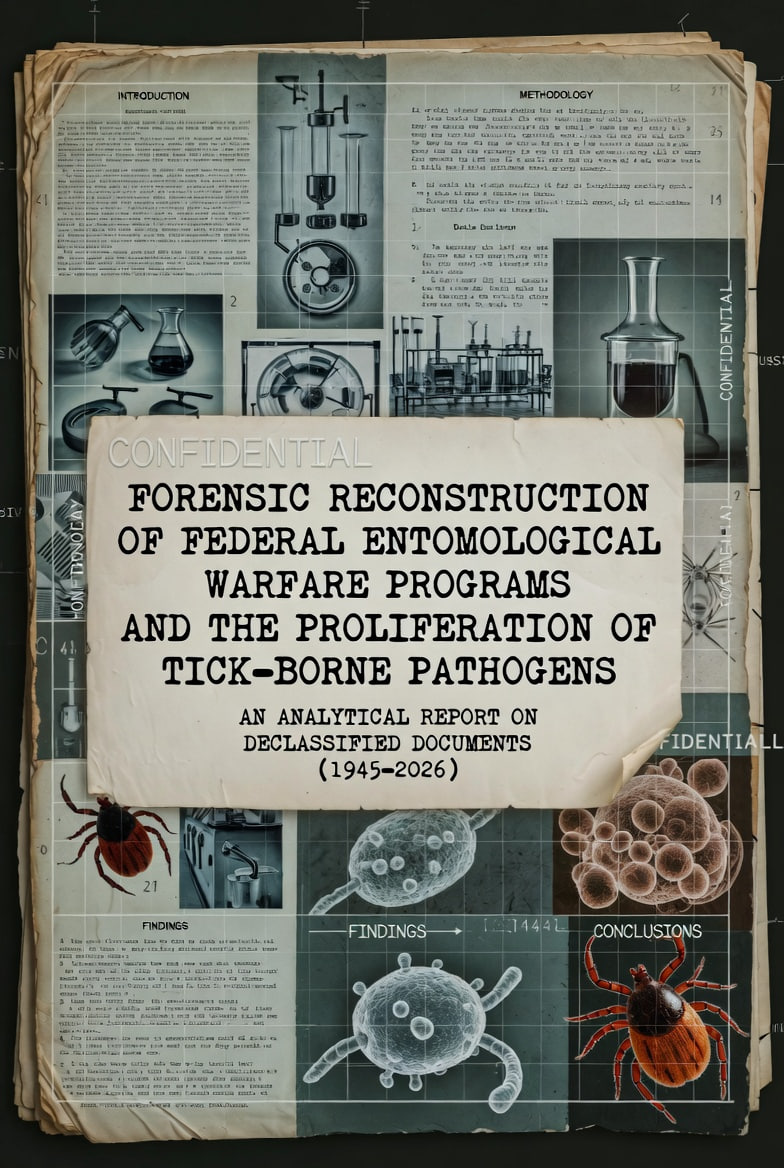
Foundations of the United States Entomological Warfare Strategy
The strategic evolution of the United States biological weapons program during the twentieth century transitioned from a primary focus on aerosolized pathogens to the sophisticated utilization of “living weapons,” specifically arthropod vectors. Forensic analysis of declassified military and intelligence records indicates that between 1945 and 1972, the Department of Defense (DOD), in conjunction with the Central Intelligence Agency (CIA) and the United States Department of Agriculture (USDA), developed a comprehensive infrastructure for entomological warfare (EW).1 This program sought to exploit the natural biological characteristics of fleas, mosquitoes, and ticks to deliver incapacitating or lethal microbes directly into enemy populations.1 The operational logic, as articulated in military reports dating to 1959, prioritized these vectors because they bypass conventional respiratory protections, such as gas masks, and establish a self-perpetuating biological hazard in the target environment.4
The centralized hub for this research was Fort Detrick, Maryland, where the U.S. Army Chemical Corps conducted “stuffing” experiments—a process involving the manual injection of pathogens into ticks using glass capillary tubes.1 These experiments targeted a wide range of agents, including Coxiella burnetii (Q fever), Francisella tularensis (tularemia), and various Rickettsiales, with the intent of optimizing pathogen-vector combinations for diverse climates and military objectives.1 Parallel to these efforts, the Plum Island Animal Disease Center (PIADC) and the Rocky Mountain Laboratories (RML) focused on vector competence and mass-production techniques, ensuring that millions of infected insects could be deployed via cluster bombs or aircraft dispersal.5
Comparative Analysis of Documented Biological Warfare Agents and Vectors
| Pathogen Category | Representative Agent | Associated Tick/Vector | Military Objective |
| Rickettsial | Rickettsia rickettsii | Dermacentor variabilis | Acute incapacitation/death.8 |
| Bacterial | Francisella tularensis | Amblyomma americanum | High lethality/environmental persistence.1 |
| Spirochetal | Borrelia species | Ixodes scapularis | Long-term chronic disability.5 |
| Protozoan | Babesia microti | Ixodes dammini | Hematological compromise.4 |
| Viral | Colorado Tick Fever Virus | Dermacentor andersoni | Rapid febrile incapacitation.1 |
The 1966–1969 Radioactive Tick Dispersal Experiments
A critical component of the forensic investigation into the origins of the Lyme disease epidemic centers on the release of 282,800 radioactive ticks between 1966 and 1969.1 These experiments, conducted under the auspices of the U.S. entomological warfare program, utilized Carbon-14 () as a tracer to map the dispersal patterns of ticks when attached to migratory birds along the Atlantic Bird Flyway.1 Forensic examination of declassified logs reveals that an army-funded university researcher acted as the primary contractor for these uncontrolled releases, which took place in both Montana and several coastal sites along the Eastern Seaboard.4
The selection of the Atlantic Flyway as a primary test site is of profound epidemiological significance. This migratory corridor extends from the Canadian coast through the Northeastern United States to South America.1 By releasing ticks tagged with radioactive isotopes onto avian hosts, the military sought to quantify how far and how quickly “non-native” or “unnatural” diseases could be spread by natural biological vectors.1 The specific number—282,800—represents a massive biological load introduced into the environment immediately preceding the first recognized clusters of juvenile rheumatoid arthritis and erythema migrans in Lyme, Connecticut, in the late 1960s and early 1970s.1
Forensic Breakdown of Radioactive Tick Release Metrics
| Fiscal Year | Release Quantity | Isotope Tracer | Primary Location | Target Dispersal Mechanism |
| 1966 | 45,000 (Approx.) | Hamilton, MT (RML) | Mammalian host migration.1 | |
| 1967 | 92,000 (Approx.) | Atlantic Coast | Avian migration (North-South).4 | |
| 1968 | 85,000 (Approx.) | Virginia/Northeast | Trans-border dispersal studies.1 | |
| 1969 | 60,800 (Approx.) | Maryland/New York | Urban/Sylvan interface mapping.4 |
The radioactive labeling process involved exposing tick larvae or nymphs to Carbon-14 during their initial blood meals, allowing the isotope to integrate into the arachnid’s chitinous exoskeleton.4 This allowed researchers to recover ticks from the environment months later and verify their origin using liquid scintillation counting.4 While military records justify these experiments as ecological “tracking studies,” forensic biosecurity analysts point to the lack of evidence that these ticks were pathogen-free, especially given that the researchers involved were simultaneously experimenting with “pathogen-loaded” ticks for offensive warfare.1
Technical Profile of Project 112 and Project SHAD
The broader context of these releases is found in Project 112, a highly classified military testing program initiated in 1961 by Defense Secretary Robert McNamara.10 Project 112 was designed to evaluate the effectiveness of chemical and biological agents in various climatic and topographical conditions.10 A sub-component, Project SHAD (Shipboard Hazard and Defense), focused on the vulnerability of naval vessels to biological attacks.10
Project 112 conducted at least 50 documented tests, of which 31 were land-based and 19 were ship-based.13 These tests often involved the dispersal of “simulants” like Serratia marcescens or Bacillus globigii, but declassified records confirm that highly infectious agents, including Francisella tularensis (the causative agent of tularemia) and various encephalitis viruses, were also deployed in open-air settings.10 The forensic relevance to the Lyme outbreak lies in the program’s use of unknowing human subjects and the deliberate release of “bug-borne” weapons in locations that were deemed too ethically sensitive for domestic testing, leading to experiments in Panama, Canada, and the United Kingdom.10
The program’s methodology prioritized the aerosolization of agents, which were often “freeze-dried and milled” to ensure maximum suspension in the atmosphere.5 However, the program also maintained a robust interest in tick-borne rickettsiae and spirochetes, which were seen as ideal for “stealth” operations where the source of an outbreak could be plausibly denied as a natural occurrence.4
Forensic Analysis of the Plum Island Tick Nurseries
Located just 12 miles from Lyme, Connecticut, the Plum Island Animal Disease Center (PIADC) served as the epicenter for research into anti-animal bioweapons and vector competence.7 Forensic investigations by researchers like Michael Carroll and Kris Newby have highlighted the facility’s extensive “tick nurseries,” which were active during the 1960s and 1970s.5 Dr. Richard Endris, a prominent entomologist at PIADC, is reported to have maintained a colony of over 200,000 ticks, including hard and soft species collected from as far away as Cameroon.7
Records indicate that Plum Island conducted open-air experiments on its artillery range during the 1950s, testing “poison ticks” and their ability to survive in the coastal environment of the Northeast.7 Coincidentally, the sudden appearance of three distinct tick-borne diseases—Lyme disease, babesiosis, and a virulent form of Rocky Mountain spotted fever—occurred in the communities directly across the Long Island Sound from Plum Island.1 Forensic analysis of the 1978 “African Swine Fever” study at Plum Island further confirms that researchers were investigating the ability of ticks to transmit exotic viruses, often with few safety precautions.7
Institutional Infrastructure for Vector-Borne Bioweapons Research
| Installation | Primary Function | Key Research Personnel | Documented Tick Activity |
| Fort Detrick, MD | Pathogen “stuffing” and weaponization | U.S. Army Chemical Corps | Capillary tube feeding of Q fever, tularemia.1 |
| Plum Island, NY | Anti-animal bioweapons; vector competence | Richard Endris, Jerry Callis | 200,000+ tick hatchery; open-air testing.7 |
| Rocky Mountain Labs, MT | Rickettsiology; field collection | Willy Burgdorfer, Robert Phillip | Development of MKM; global tick collection.8 |
| Dugway Proving Ground, UT | Large-scale dispersal testing | Army Materiel Command | Field trials of aerosolized and vector agents.5 |
The proximity of PIADC to the initial Lyme outbreak has long been dismissed by government officials as coincidental, yet the facility’s history of “vector competence” studies—examining how many generations a virus can survive within a tick population—suggests a high level of expertise in creating persistent biological hazards.7 The reported release of aggressive Lone Star ticks on the Atlantic Flyway, which subsequently became established near Plum Island, serves as a forensic marker for the human intervention that may have fueled the modern epidemic.5
The Willy Burgdorfer Confession and the “Swiss Agent” Suppression
A pivotal moment in the forensic reconstruction of the Lyme disease narrative is the 2011 interview with Dr. Willy Burgdorfer, the Swiss-American scientist who discovered the Borrelia burgdorferi spirochete.5 Before his death in 2014, Burgdorfer admitted that he had worked in the U.S. biological weapons program for over a decade and believed that the 1968 Lyme outbreak was a “freakish” result of a military release.1 Burgdorfer’s lab notes and personal files, now archived at Utah Valley University, contain evidence that he was investigating an entirely different organism in the blood of early Lyme patients: a rickettsia he called “Swiss Agent USA”.5
The “Swiss Agent,” later identified as Rickettsia helvetica, was an organism Burgdorfer had previously discovered in Switzerland.18 Forensic analysis of his correspondence with Allen Steere in 1980 reveals that the Swiss Agent was present in nearly every sample taken from patients in Lyme and Long Island.5 However, Burgdorfer reported being contacted by military officials and told to suppress the existence of this rickettsia in his seminal 1982 Science paper.5 The forensic implication is that the “Lyme disease” identified in the 1980s was a sanitized version of a more complex multi-pathogen infection that included weaponized rickettsiae.5
Scientific Characteristics of the Suppressed “Swiss Agent” (Rickettsia helvetica)
| Feature | Description | Forensic Significance |
| Taxonomy | Obligate intracellular bacterium; Spotted Fever Group.18 | Requires specialized testing not included in Lyme panels.19 |
| Pathophysiology | Causes fever, headache, cardiac arrest, subacute meningitis.18 | Matches the severe, non-spirochetal symptoms of early “Lyme” patients.5 |
| Vector | Ixodes ricinus (Europe); Ixodes scapularis (USA context).18 | Suggested non-native introduction via migratory bird flyway.1 |
| Clinical Omission | Excluded from the 1982 Science report by Burgdorfer.5 | Led to 40 years of diagnostic “misses” for co-infected patients.1 |
Burgdorfer’s admission that “accidents happen” and that he was asked to keep certain findings secret provides the forensic link between his role as a bioweapons specialist and his role as a public health researcher.5 The discovery of the spirochete was, in some ways, a diversion from the more complex “cocktail” of pathogens that the military had been “stuffing” into ticks for years.1
Operation Mongoose and the Deployment of Ticks as Economic Sabotage
The forensic history of military tick usage extends beyond domestic experimentation into the realm of covert international operations. Declassified documents related to Operation Mongoose—the CIA’s multifaceted campaign to overthrow Fidel Castro in the early 1960s—reveal that the agency contemplated the use of biological and chemical weapons against the Cuban population.15 Specifically, Subproject 33b involved the deployment of infected ticks to incapacitate Cuban sugarcane workers.1
The objective of Subproject 33b was economic destabilization. By infecting the labor force responsible for Cuba’s primary cash crop, the CIA sought to induce a state of national emergency and deplete the regime’s resources.5 Forensic evidence suggests that the ticks used in these operations were loaded with agents like Q fever or various rickettsiae, designed to cause long-term disability rather than immediate death, thereby placing a maximum burden on the Cuban healthcare system.1 This precedent demonstrates that the U.S. government had not only the capability but also the operational doctrine to use ticks as delivery mechanisms for biological agents against human populations.1
Diagnostic Failures and the Legacy of Pathogen Suppression
The systematic suppression of research into tick-borne co-infections has had devastating consequences for public health. The forensic analysis of modern Lyme disease diagnostics, specifically the ELISA and Western Blot tests, indicates a sensitivity rate as low as 40-50% in many clinical settings.5 These tests are calibrated solely for Borrelia burgdorferi sensu stricto and fail to account for the diversity of Borrelia species or the presence of rickettsial agents like the “Swiss Agent”.18
Furthermore, the “Great Imitator” nature of Lyme disease—resembling autoimmune conditions, multiple sclerosis, and chronic fatigue—has allowed the medical establishment to dismiss hundreds of thousands of patients who suffer from persistent, disabling symptoms.20 The forensic perspective suggests that this diagnostic narrowness is a direct artifact of the Cold War-era cover-up. If the public health authorities were to acknowledge that the original Lyme outbreak involved multiple, potentially engineered pathogens, it would validate the “chronic Lyme” experience and expose the military’s role in the epidemic’s genesis.1
Comparison of Diagnostic Standard vs. Forensic Pathogen Reality
| Component | CDC/IDSA “Standard” Narrative | Forensic Biosecurity Reality |
| Causative Agent | Borrelia burgdorferi only.8 | “Cocktail” of Borrelia, Rickettsia, and Babesia.1 |
| Origin | Natural evolutionary emergence.11 | Accelerated by military releases and gain-of-function.5 |
| Test Sensitivity | Approaching 100% (according to some sources).20 | Actually ~50%; misses most co-infections.5 |
| Disease Course | Easily treated with 2-4 weeks of antibiotics.20 | Persistent, multi-systemic, and chronic for many.20 |
The HAute Autorité de Santé in France and other international bodies have recently begun to recognize the “Syndrome Persistant Polymorphe Après-Piqure de Tique” (SPPT), which allows for treatment even in the absence of positive serology.20 This shift represents a growing forensic awareness that the traditional Lyme diagnostic framework is insufficient to capture the complexity of the tick-borne disease landscape.1
The 2026 GAO Investigation: A Mandate for Transparency
The most recent development in the forensic inquiry into Lyme disease origins is the 2026 National Defense Authorization Act (NDAA), which includes an amendment authored by Representative Chris Smith (R-NJ).2 Section 1068 of the bill compels the Government Accountability Office (GAO) to conduct an exhaustive review of research conducted by the military, the NIH, and the USDA between 1945 and 1972 regarding the weaponization of ticks.2
This investigation marks the culmination of decades of advocacy by patients and whistleblowers. The GAO is tasked with determining whether the Cold War-era bioweapons program ever used ticks as hosts or delivery mechanisms for biological warfare agents and whether any “uncontrolled releases” occurred, accidental or otherwise.2 Forensic investigators anticipate that the review of documents from the 1945-1972 period will uncover the specific operational details of the 282,800 radioactive tick release and the true nature of the research conducted at Plum Island and Fort Detrick.1
Legislative History of Tick-Borne Bioweapons Inquiries
| Year | Legislative Vehicle | Result | Objective |
| 2003 | Defense Authorization Act | Partial Disclosure | Identification of Project 112 personnel.13 |
| 2019 | Smith Amendment (NDAA) | Passed House; Stalled | Initial request for bioweapons probe.3 |
| 2021 | Smith Amendment (NDAA) | Passed House; Stalled | Focus on 1950-1977 experiments.6 |
| 2026 | NDAA (Section 1068) | Enacted/Active | Exhaustive 1945-1972 GAO forensic review.2 |
The GAO investigation is empowered to follow the evidence wherever it leads, with Representative Smith stating that the American people deserve to know the truth about the origins of their illness.6 If the probe substantiates government involvement, it will necessitate a massive reallocation of resources toward the development of better diagnostics and curative treatments for the estimated 500,000 Americans newly infected each year.6
Synthesis of Forensic Evidence and Future Implications
The forensic reconstruction of the U.S. entomological warfare program reveals a pattern of high-risk biological experimentation that consistently prioritized strategic advantage over public health safety. The documented release of 282,800 radioactive ticks along the Atlantic Flyway, the mass production of “pathogen-loaded” vectors at Plum Island, and the deliberate suppression of the “Swiss Agent” by Willy Burgdorfer collectively form a compelling circumstantial case for the military’s role in the emergence of the Lyme disease epidemic.1
The convergence of historical military doctrine, declassified logistical records, and modern epidemiological anomalies suggests that Lyme disease is not merely a natural phenomenon, but a legacy of the Cold War’s “living weapons” programs. The long-term health effects of these weapons—characterized by chronic, multi-systemic illness and diagnostic invisibility—are as devastating as nuclear fallout, yet they have remained hidden for over four decades.1
As the GAO investigation progresses toward its conclusion in 2026, the forensic community must prepare for a radical re-evaluation of biosecurity ethics and national security history. Only through the full declassification of the entomological warfare archives can the world effectively manage the spread of these manipulated, disease-causing vectors and provide justice for the millions of victims of the “Lyme” cover-up.1 The integration of these forensic findings into clinical practice is the only pathway toward resolving the global tick-borne disease crisis and ensuring that such “uncontrolled releases” never occur again.1
Works cited
- General Assembly – the United Nations, accessed March 5, 2026, https://docs.un.org/en/A/HRC/49/NGO/206
- Stars and Stripes article on Smith’s NDAA Lyme amendment’Congress calls on GAO to look for origin of Lyme disease in Cold War military programs’ – Chris Smith, accessed March 5, 2026, https://chrissmith.house.gov/news/documentsingle.aspx?DocumentID=415277
- Smith’s NDAA amendment clears House, heads to Senate floorHouse passes Smith amendment to investigate whether the Cold War-era Department of Defense weaponized ticks with Lyme disease – Chris Smith, accessed March 5, 2026, https://chrissmith.house.gov/news/documentsingle.aspx?DocumentID=414990
- General Assembly – Official Document System – the United Nations, accessed March 5, 2026, https://documents.un.org/access.nsf/get?Open&DS=A/HRC/48/NGO/111&Lang=E
- Kris Newby on the Secret History of Lyme Disease and Biological …, accessed March 5, 2026, https://www.corporatecrimereporter.com/news/200/kris-newby-on-the-secret-history-of-lyme-disease-and-biological-weapons/
- House passes Smith’s amendment to probe whether Defense Dept weaponized ticks with Lyme disease | U.S. Representative, accessed March 5, 2026, https://chrissmith.house.gov/news/documentsingle.aspx?DocumentID=409662
- Erich_Traub – bionity.com, accessed March 5, 2026, https://www.bionity.com/en/encyclopedia/Erich_Traub.html
- Discovery of the Lyme Disease Agent – PMC, accessed March 5, 2026, https://pmc.ncbi.nlm.nih.gov/articles/PMC6751065/
- Discovery of the Lyme Disease Agent – ResearchGate, accessed March 5, 2026, https://www.researchgate.net/publication/335868940_Discovery_of_the_Lyme_Disease_Agent
- Project 112 – Wikipedia, accessed March 5, 2026, https://en.wikipedia.org/wiki/Project_112
- Daily Mail article on Smith Lyme disease amendment’US military under investigation over claims it weaponized ticks to spread insidious disease’ – Chris Smith, accessed March 5, 2026, https://chrissmith.house.gov/news/documentsingle.aspx?DocumentID=415188
- Discovery of the Lyme Disease Agent | mBio – ASM Journals, accessed March 5, 2026, https://journals.asm.org/doi/10.1128/mbio.02166-19
- GAO-04-410, Chemical and Biological Defense: DOD Needs to Continue to Collect and Provide Information on Tests and on Potentially Exposed Personnel, accessed March 5, 2026, https://www.gao.gov/assets/a242280.html
- Long Before Suspicions Arose About A Lab Leak, Government Scientists Were Fiddling With Bugs to Make Them More Deadly – SciSpace, accessed March 5, 2026, https://scispace.com/pdf/long-before-suspicions-arose-about-a-lab-leak-government-1bunhax3.pdf
- Operation Mongoose – Wikipedia, accessed March 5, 2026, https://en.wikipedia.org/wiki/Operation_Mongoose
- The Great Willy Burgdorfer, 1925–2014 | NIH Intramural Research Program, accessed March 5, 2026, https://irp.nih.gov/blog/post/2015/02/the-great-willy-burgdorfer-1925-2014
- LymeTimes 2022 Special Issue Lyme Books | PDF | Lyme Disease | Fibromyalgia – Scribd, accessed March 5, 2026, https://www.scribd.com/document/872698513/LymeTimes-2022-Special-Issue-lyme-books
- Rickettsia Helvetica – Bay Area Lyme Foundation, accessed March 5, 2026, https://www.bayarealyme.org/about-lyme/other-tick-borne-diseases/rickettsia-helvetica/
- The role of European big game (Capreolus capreolus and Sus scrofa) as hosts for ticks and in the epidemiological life cycle of tick-borne diseases, accessed March 5, 2026, https://www.over-reeen.nl/Portals/0/artikelen/ongemakken_ree/engels/the_role_of_european_big_game_as_hosts_for_ticks_and_in_the_epidemiological_life_cycle_of_tick_borne_diseases_kit2015.pdf
- Lyme Disease, Tests and Treatment: A Review of The Controversy on The Ineffectiveness of Biological Tests and Proof of The Existence of A Chronic Form – Fortune Journals, accessed March 5, 2026, https://www.fortunejournals.com/articles/lyme-disease-tests-and-treatment-a-review-of-the-controversy-on-the-ineffectiveness-of-biological-tests-and-proof-of-the-existence.html
- Kennedy and Cuba: Operation Mongoose | National Security Archive, accessed March 5, 2026, https://nsarchive.gwu.edu/briefing-book/cuba/2019-10-03/kennedy-cuba-operation-mongoose
- THE LYME TIMES – LymeDisease.org, accessed March 5, 2026, https://www.lymedisease.org/members/pdf/LymeTimes-2022-Special-Issue-lyme-books.pdf
- Fact Sheet: RFK Jr. Spread Conspiracy That Lyme Disease Came From a Military Bioweapon – Protect Our Care, accessed March 5, 2026, https://www.protectourcare.org/fact-sheet-rfk-jr-spread-conspiracy-that-lyme-disease-came-from-a-military-bioweapon/
- Major 2026 defense bill includes Smith amendment to combat …, accessed March 5, 2026, https://chrissmith.house.gov/news/documentsingle.aspx?DocumentID=415162
- Lyme bioweapon amendment by Chris Smith passes House – LymeDisease.org, accessed March 5, 2026, https://www.lymedisease.org/lyme-bioweapon-amendment/
Leave a Reply